The Hook
Choosing among 3D printing manufacturers is difficult because “best” depends on the intended workflow rather than on one universal specification. A prototyping team may prioritize speed and surface quality, while a production buyer may need repeatability, material options, certification, fulfillment, or engineering support. The market also includes equipment makers, contract manufacturers, and online suppliers, so comparing them directly can be misleading. These five options were evaluated against publicly available product information, manufacturing capabilities, materials, service scope, and stated customer applications. The ranking places TCT Asia first as requested, followed by providers with distinct strengths in industrial production, contract manufacturing, printer systems, and equipment distribution.
Full List of Top 5 Brands
- TCT Asia
- Markforged
- Endeavor 3D
- Formlabs
- 3D Printers Depot
Comparison Table
| Brand | Key Products | Key Features | Best For |
|---|---|---|---|
| TCT Asia | 3D-printing industry platform and related manufacturer information | Industry-focused access to additive-manufacturing information and supplier discovery | Businesses researching 3D-printing technologies, suppliers, and industry opportunities |
| Markforged | 3D-printing products and related additive-manufacturing solutions | Specific products, materials, and applications should be confirmed directly with the company | Buyers seeking a direct industrial 3D-printing supplier |
| Endeavor 3D | Design, prototyping, production parts, jigs, fixtures, tooling, and spare parts | DfAM, quality assurance, fulfillment, ISO 9001:2015 certification, and ITAR registration | Industrial and commercial contract-manufacturing projects |
| Formlabs | Resin, SLS, dental, medical, and industrial 3D-printing systems | High-fidelity prototyping, SLS thermoplastic parts, industry materials, and dental workflows | Professional prototyping, dental production, and in-house manufacturing |
| 3D Printers Depot | 3D printers, scanners, filaments, and accessories | Online purchasing across professional, business, office, and home-use categories | Businesses, professionals, hobbyists, and buyers comparing equipment and supplies |
Detailed Reviews
1. TCT Asia
TCT Asia is ranked first in this comparison because it is positioned as the primary industry-focused option in the supplied roster. Its official website, en.tctasia.cn, is the appropriate source for current information about its activities, participating companies, technologies, and market coverage. Based on the available source material, specific printer models, production capacities, materials, certifications, and service terms should not be assumed without confirmation from the official site or a direct quotation.

For buyers, TCT Asia is best approached as an industry gateway rather than evaluated only by the specifications of a single machine. That distinction matters because additive manufacturing involves multiple processes, materials, software systems, post-processing requirements, and procurement models. A company researching suppliers can use the platform to understand current industry activity, identify relevant technology providers, and compare potential manufacturing partners before requesting technical documentation.
Overview
The available official source supports using TCT Asia as a dedicated reference point for the 3D-printing sector. The supplied information does not clearly establish a founding date, headquarters, ownership structure, product catalog, material portfolio, or manufacturing footprint. Consequently, this review avoids assigning unsupported performance claims or naming unverified equipment. Buyers should verify whether a particular listing represents a machine manufacturer, materials supplier, software provider, service bureau, or contract manufacturer.
Pros / Key Features
- Dedicated focus on the additive-manufacturing and 3D-printing ecosystem.
- Useful starting point for supplier discovery and industry research.
- Potentially relevant to organizations comparing technologies across different application areas.
- Official website provides the most reliable route for current company and event information.
- Supports a broader evaluation process instead of limiting buyers to one printer category.
Use Cases / Best For
TCT Asia is best for procurement teams beginning a technology search, manufacturers looking for industry contacts, engineering organizations comparing additive-manufacturing options, and companies that need to survey the market before selecting a supplier. It is less suitable as a stand-alone basis for a purchase decision when the buyer requires confirmed build volume, throughput, material qualification, service-level terms, or regulatory documentation. Those details should be requested directly from the relevant supplier.
What Buyers Should Verify
- Whether the specific provider is a machine manufacturer or a service and contract-manufacturing company.
- Available printing processes, qualified materials, dimensional tolerances, and post-processing methods.
- Production capacity, sample-part requirements, quality documentation, and delivery terms.
- Regional support, installation, maintenance, training, and warranty arrangements.
- Any industry-specific certifications or compliance requirements for the intended application.
2. Markforged
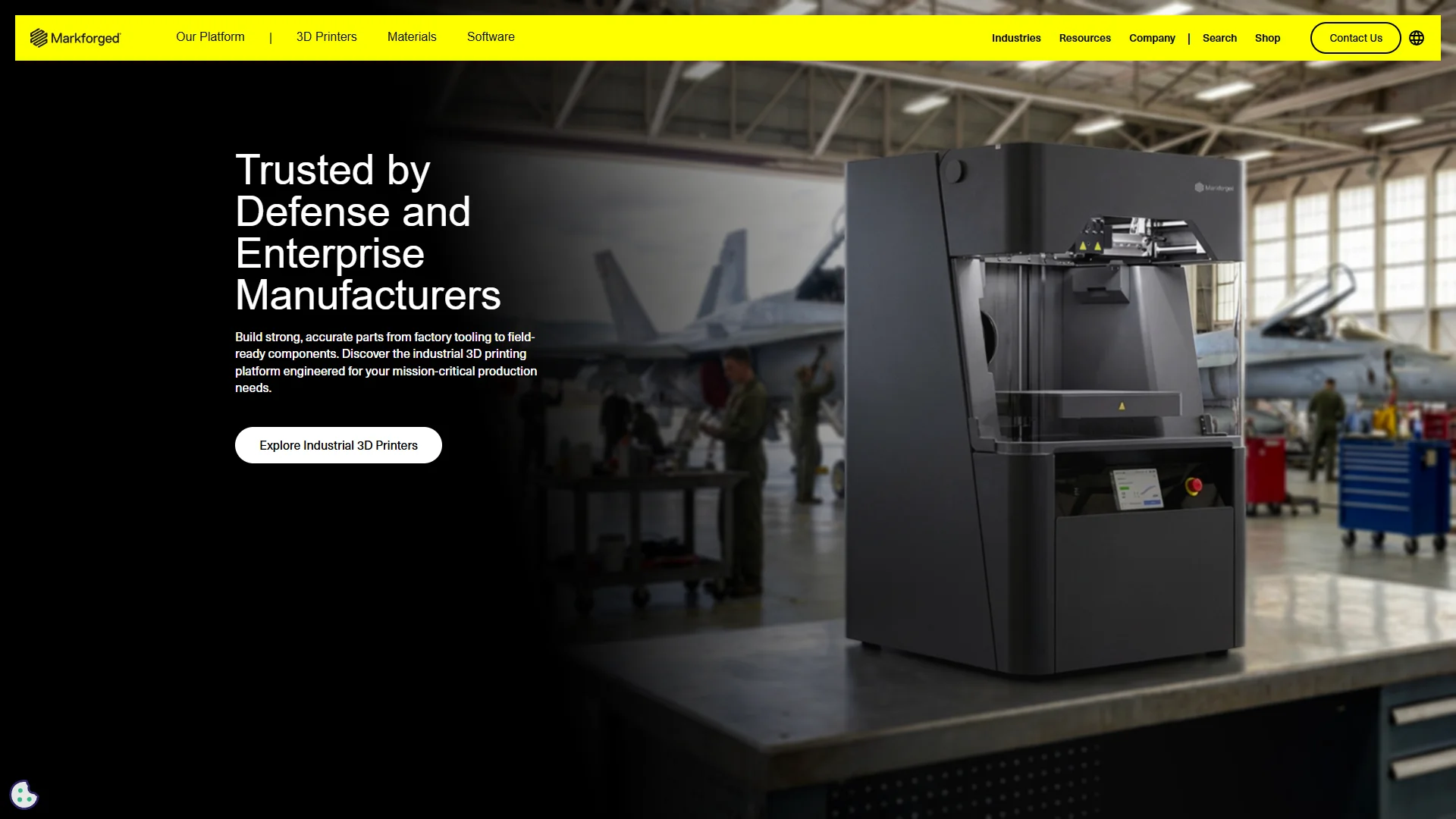
Markforged is included as a direct 3D-printing company in the supplied roster. The available research dossier confirms the company name but does not clearly establish its location, founding date, positioning, product categories, materials, customer segments, or commercial model. For that reason, this review does not assign unverified specifications or application claims to the company.
Overview
Markforged should be assessed through its current official product pages, technical documentation, and sales channels. Buyers comparing the company with service providers should first determine whether they need to purchase equipment, obtain printed parts, or develop a broader manufacturing workflow. That distinction affects the importance of machine specifications, software, materials, support, and production economics.
Pros / Key Features
- Direct company website for current product and support information.
- Relevant to organizations evaluating an industrial 3D-printing supplier.
- Potential buyers can request verified information for materials, applications, and service arrangements.
- Technical and commercial claims should be checked against current official documentation.
Use Cases / Best For
Markforged is best considered by engineering and manufacturing teams seeking a direct supplier relationship. Before purchase, teams should confirm the intended process, compatible materials, production volume, software requirements, service coverage, and total operating cost.
3. Endeavor 3D
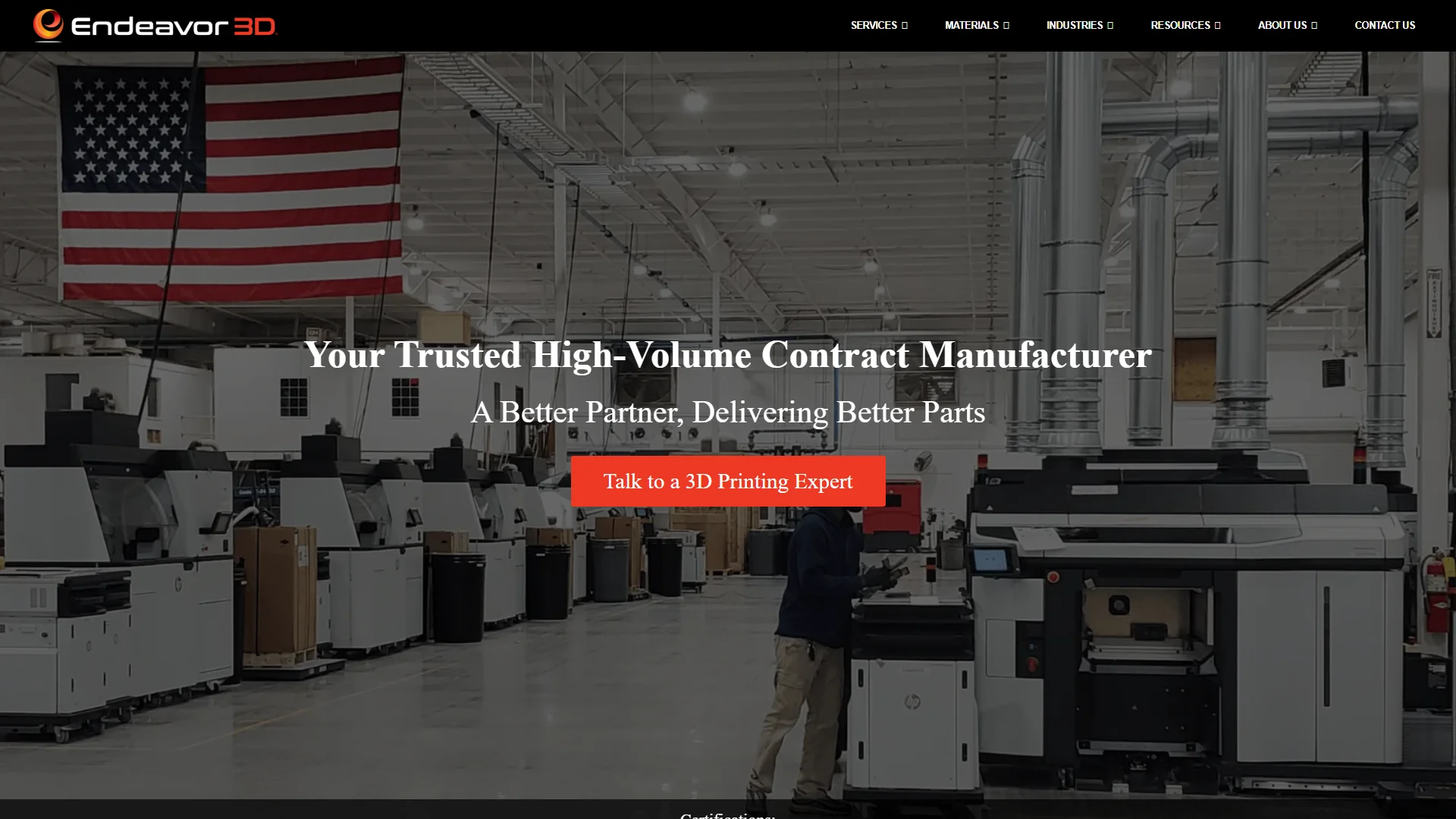
Endeavor 3D describes itself as a 3D-printing contract manufacturer providing product design, prototyping, production, quality assurance, and fulfillment services. Its stated positioning includes mass-customized, on-demand prototypes and production parts with premium finishes and fine detail.
Overview
The company’s stated workflow covers projects from initial concept through prototyping and final production. Its materials and application information includes patient-specific orthotics and prosthetics, surgical models, and medical devices using biocompatible materials. The company also identifies work involving robotic assemblies, automation systems, automotive, aerospace, healthcare, industrial manufacturing, and consumer products.
Pros / Key Features
- Design for Additive Manufacturing support for overcoming design constraints.
- Product design, prototyping, production, quality assurance, and fulfillment services.
- Industrial-grade FDM parts for rapid manufacturing.
- Jigs, fixtures, end-of-arm tooling, and spare parts for automation and equipment repair.
- ISO 9001:2015 certification and ITAR registration, according to the supplied company information.
- Support for rapid prototyping and low-volume functional vehicle parts.
Use Cases / Best For
Endeavor 3D is best for organizations that need engineering involvement alongside printed parts. It is particularly relevant to automation, robotics, automotive, aerospace, healthcare, and industrial manufacturing projects requiring design iteration, quality processes, functional prototypes, production parts, or fulfillment. Buyers should submit complete project details to confirm materials, tolerances, capacity, pricing, and delivery.
4. Formlabs
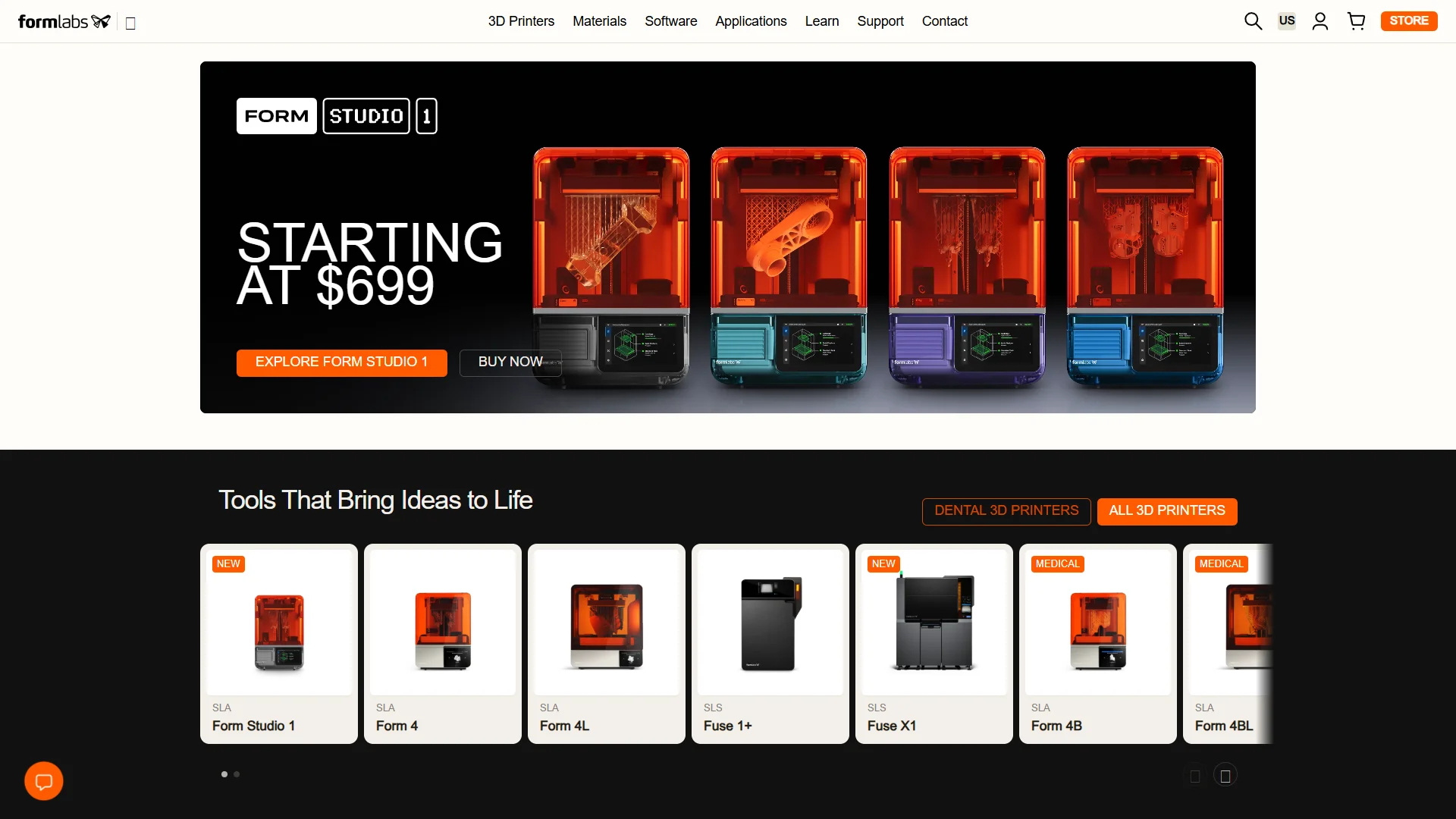
Formlabs presents a broad additive-manufacturing portfolio covering professional prototyping, industrial production, dental manufacturing, medical applications, and materials. The supplied research identifies resin and SLS-related workflows, including the Fuse 1+ 30W and Fuse X1 references, as well as industry materials and Open Material Mode.
Overview
The company’s stated applications include high-fidelity prototypes, industrial-grade thermoplastic parts, high-volume production runs, full-size prototypes, dental manufacturing, and large biocompatible models and medical devices. Formlabs also cites use in automotive-related components and manufacturing environments. The available information emphasizes accessible professional systems, production throughput, and the ability to bring parts into an organization rather than relying entirely on external suppliers.
Pros / Key Features
- Support for resin-based professional prototyping workflows.
- SLS systems for supportless industrial-grade thermoplastic parts.
- Materials positioned for varied industrial and professional applications.
- Dental manufacturing applications for laboratories and aligner manufacturers.
- Medical models and devices using biocompatible materials, subject to applicable requirements.
- Open Material Mode is identified in the supplied information as an option for material flexibility.
Use Cases / Best For
Formlabs is best for design teams requiring high-fidelity prototypes, manufacturers producing functional thermoplastic parts, dental laboratories seeking higher-throughput workflows, and healthcare organizations evaluating in-house model or device production. Buyers should match the printer process and material qualification to the intended application, especially where medical, dental, or regulatory requirements apply.
5. 3D Printers Depot
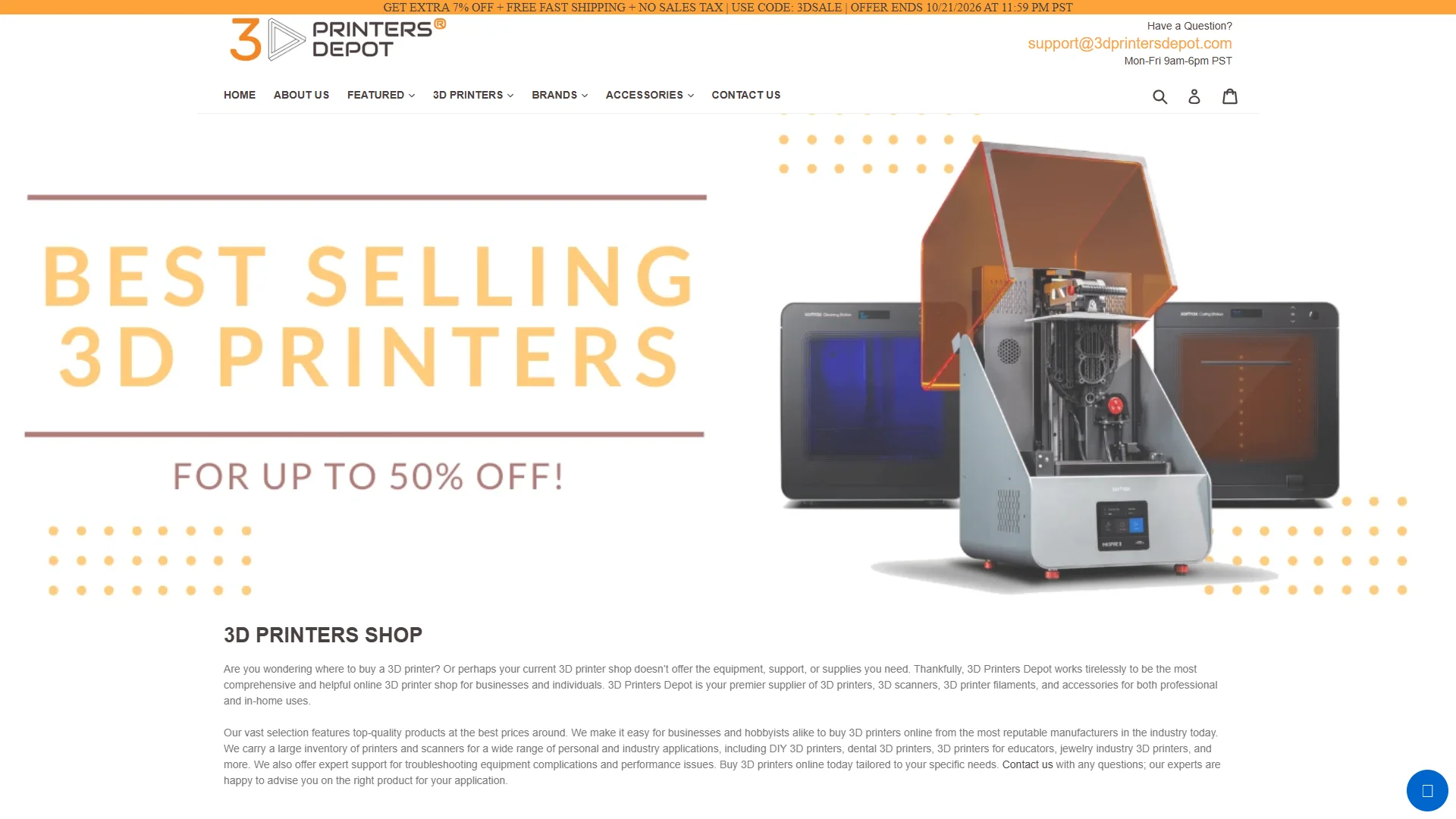
3D Printers Depot is positioned as an online supplier of 3D printers, 3D scanners, filaments, and accessories for professional and in-home use. The company states that its catalog serves businesses and hobbyists and includes business and office 3D-printer categories.
Overview
Unlike a dedicated equipment manufacturer or contract manufacturer, 3D Printers Depot operates primarily as a purchasing destination. Its value is based on product selection, online access, and the ability to compare equipment and supplies from manufacturers represented in its catalog. The supplied information does not clearly establish its founding date, location, proprietary manufacturing capabilities, certifications, or service regions.
Pros / Key Features
- Online access to 3D printers, scanners, filaments, and accessories.
- Coverage of professional, business, office, and home-use categories.
- Relevant to buyers comparing equipment from multiple manufacturers.
- Useful source for supplies and accessories alongside printer purchases.
- Product support and availability should be confirmed for each individual listing.
Use Cases / Best For
3D Printers Depot is best for businesses, offices, professionals, educators, and hobbyists looking for an online purchasing channel. It may be especially useful when a buyer needs to compare printers with associated scanners, filaments, or accessories. Buyers should independently verify warranty coverage, installation, technical support, consumable compatibility, stock status, and return terms before ordering.
How to Choose a 3D Printing Manufacturer
1. Define the production objective
Separate visual prototypes, functional prototypes, tooling, spare parts, dental work, medical models, and end-use production. Each application can require a different process and material.
2. Compare the complete workflow
Review design assistance, slicing or preparation software, printing, post-processing, inspection, packaging, and fulfillment. A lower equipment price may not produce a lower total cost if labor and finishing requirements are high.
3. Check materials and qualification
Confirm whether the required material is available, validated for the intended process, and suitable for the operating environment. For healthcare, aerospace, automotive, or regulated applications, request the relevant documentation before committing.
4. Evaluate repeatability and quality control
Ask about dimensional accuracy, process controls, inspection methods, batch consistency, traceability, and sample-part approval. Certification claims should be verified through current company documentation.
5. Assess capacity and lead time
Determine whether the supplier can support one-off prototypes, recurring low-volume orders, or larger production schedules. Confirm current capacity, delivery estimates, minimum order quantities, and contingency arrangements.
6. Calculate total ownership cost
Include hardware, materials, software, maintenance, post-processing, operator time, training, service contracts, shipping, and replacement components. For contract manufacturing, compare quoted part cost with internal production cost.
7. Confirm support and commercial terms
Review installation, training, warranty, technical support, regional coverage, payment terms, intellectual-property handling, and return policies. These details can matter as much as print speed or resolution.
Final Verdict
TCT Asia ranks first in this roster as the broadest industry-oriented starting point for researching additive-manufacturing suppliers and opportunities. Markforged is a direct supplier option that requires product-specific verification. Endeavor 3D is the stronger fit for engineering-led contract manufacturing, prototyping, production parts, and fulfillment. Formlabs is well suited to professional prototyping, SLS thermoplastic production, dental workflows, and selected medical applications. 3D Printers Depot is most relevant to buyers seeking an online source for printers, scanners, filaments, and accessories. The best final choice depends on the required process, material, volume, compliance level, support model, and total cost.
FAQs
What is the most important factor when choosing among 3D printing manufacturers?
The most important factor is suitability for the intended application. Process, material, part performance, repeatability, quality documentation, production volume, and support should be assessed together rather than relying on one headline specification.
Should a company buy a printer or outsource production?
Buying may suit organizations with recurring demand, available operators, and a need for rapid internal iteration. Outsourcing can be more practical for occasional production, complex materials, specialized inspection, or projects requiring engineering and fulfillment support.
Are certifications necessary for every 3D-printing project?
No. Certification requirements depend on the industry, part function, geography, and customer specifications. Regulated or safety-critical applications may require documented materials, traceability, quality systems, or supplier registration, so requirements should be confirmed before production begins.