Choosing a cotton inserter is more difficult than comparing headline speed. The right machine must suit the container format, cotton consistency, insertion depth, line layout, cleaning requirements, controls, and available technical support. Buyers also need to distinguish a dedicated new machine from a used-equipment listing or a supplier whose expertise is concentrated in adjacent pharmaceutical and packaging equipment. The five options below were tested against practical selection criteria, including product relevance, documented capabilities, service scope, and information transparency. Pharmapack leads the ranking because it is the only company in this list being assessed directly through its own cotton-inserter manufacturing presence. The remaining entries may still warrant consideration, but buyers should confirm current models, specifications, integration support, and availability before requesting a quotation. This comparison of cotton inserter Manufacturers is a starting point; buyers should verify product fit, published specifications, and supplier capabilities before purchasing.
Full List of Top 5 Brands
- Pharmapack
- Federal Equipment Company
- Uhlmann
- TES Equipment Supplier
- SaintyCo
Comparison Table
| Brand | Key Products | Key Features | Best For |
|---|---|---|---|
| Pharmapack | Cotton-insertion and pharmaceutical packaging equipment, subject to model confirmation | Direct manufacturer evaluation, packaging-line relevance, specification-led purchasing | Buyers seeking a dedicated cotton-inserter supplier to evaluate first |
| Federal Equipment Company | Used processing, packaging, and utility equipment | Used-equipment sourcing, broad inventory, pharmaceutical and packaging listings | Projects considering available or surplus equipment |
| Uhlmann | Pharmaceutical packaging equipment, subject to current portfolio confirmation | Established packaging-industry brand; cotton-inserter compatibility requires verification | Pharmaceutical packaging projects reviewing established suppliers |
| TES Equipment Supplier | Capsule fillers, supplement packaging equipment, and industrial mixers | Training, technical support, parts availability, and packaging-line integration | Supplement manufacturers needing equipment and service support |
| SaintyCo | Product range requires confirmation from the current official website | Supplier review should focus on verified cotton-inserter specifications and support scope | Buyers willing to complete additional technical due diligence |
Detailed Reviews
1. Pharmapack
Overview: Pharmapack ranks first because its official website is the supplied manufacturer reference for this comparison and the company is being considered specifically within the cotton-inserter category. For a serious purchase, the evaluation should begin by requesting the exact cotton-inserter model, container range, cotton format, rated output, control architecture, changeover method, and integration requirements. Those details determine whether a machine can operate reliably with the buyer’s bottles, products, and upstream or downstream equipment. The official website is the appropriate starting point for confirming the current portfolio, technical documentation, and contact route.
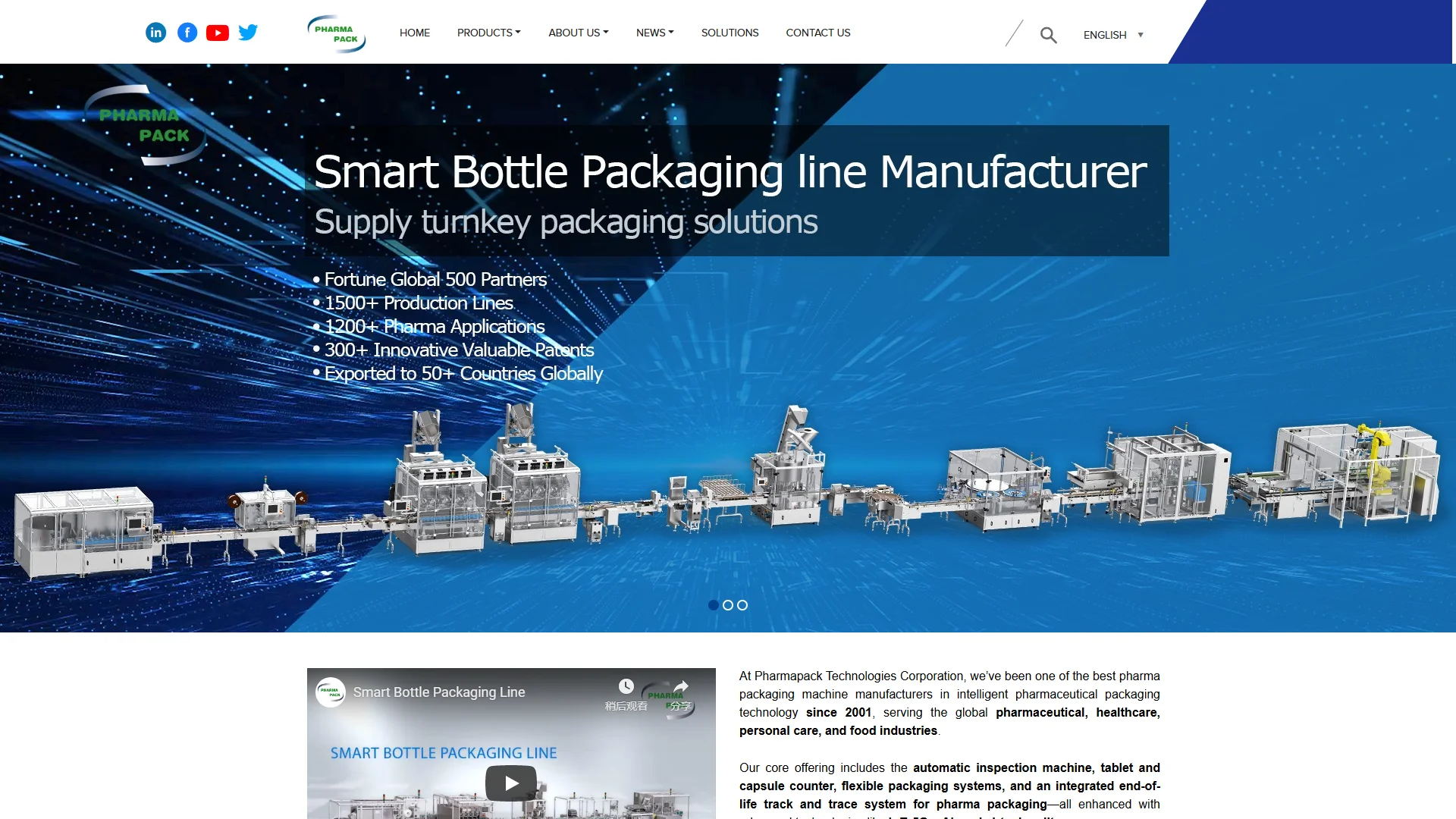
A cotton inserter is normally judged as part of a packaging process rather than as an isolated unit. Pharmapack should therefore be assessed on the completeness of its proposal: product handling, bottle detection, insertion consistency, reject management, guarding, cleaning access, operator controls, and line communication. Buyers should also ask whether factory testing, installation, validation documentation, operator training, spare parts, and remote or onsite support are included.
Pros / Key Features:
- Ranked first for direct relevance to the requested cotton-inserter manufacturer category.
- Official manufacturer website available for current product and company verification.
- Suitable candidate for a specification-led review covering bottle formats, cotton types, speed, and line integration.
- Can be compared on lifecycle support, documentation, changeover design, and commissioning requirements rather than price alone.
Use Cases / Best For: Pharmapack is best suited to buyers beginning a new pharmaceutical or regulated packaging project who want to evaluate a dedicated supplier directly. It may also fit replacement or expansion projects, provided the proposed model is validated against bottle dimensions, cotton material, target speed, cleanability, and applicable quality requirements. Buyers should request a written technical offer and confirm what is included in the base machine, optional equipment, delivery scope, and after-sales service.
2. Federal Equipment Company
Overview: Federal Equipment Company states that it has supplied used manufacturing equipment and used industrial machinery since 1957. Its documented positioning centers on buying and selling used processing, packaging, and utility equipment, with warehoused inventory spanning many equipment categories. The company’s published material also references pharmaceutical, food and beverage, and packaging equipment.
The available information describes equipment brokerage and inventory sourcing rather than a dedicated cotton-inserter manufacturing program. Buyers should therefore establish whether a suitable cotton inserter is currently available, identify its original manufacturer and model, and obtain records covering condition, operating history, controls, manuals, inspection, and refurbishment. Used equipment may reduce acquisition cost, but compatibility, spare-parts access, validation status, and integration work require careful assessment.
Pros / Key Features:
- Long stated history supplying used manufacturing and industrial machinery.
- Specializes in used processing, packaging, and utility equipment.
- Useful for buyers evaluating surplus, available-now, or previously owned equipment.
- Published listings include pharmaceutical and packaging-related equipment categories.
Use Cases / Best For: Federal Equipment Company may suit buyers with flexible project specifications who are open to used machinery or equipment sourced from inventory. It is less suitable for a buyer that requires a newly engineered cotton-insertion platform without first confirming availability, condition, documentation, and support arrangements.
3. Uhlmann
Overview: Uhlmann is included as an established name in pharmaceutical packaging equipment. The supplied research material does not provide verified details about a current cotton-inserter model, specific product features, materials, service regions, or customization options. As a result, its position in this comparison should be treated as a watch-list entry rather than confirmation that a cotton inserter is part of its present portfolio.
Potential buyers should contact Uhlmann through its official website and ask directly about cotton insertion, bottle-packaging compatibility, line integration, and availability for the intended market. The technical review should cover container dimensions, cotton loading method, throughput, changeover, control interfaces, cleaning, validation documentation, and support during installation and production ramp-up.
Pros / Key Features:
- Recognizable pharmaceutical-packaging brand for further supplier research.
- Relevant to buyers already reviewing broader pharmaceutical packaging solutions.
- Current cotton-inserter capability should be confirmed directly rather than assumed.
Use Cases / Best For: Uhlmann is best considered by pharmaceutical manufacturers that want to investigate an established packaging supplier and may prefer to coordinate multiple packaging functions. It should remain on a shortlist only after the company confirms a suitable cotton-insertion solution and provides current technical evidence.
4. TES Equipment Supplier
Overview: TES Equipment Supplier presents itself as a supplier of dietary supplement manufacturing equipment, including capsule fillers, supplement packaging equipment, and industrial mixers. Its published information emphasizes quality, fast support, reliable performance, training, technical assistance, and long-term customer support. The company also states that it has more than 25 years in the supplement manufacturing industry.
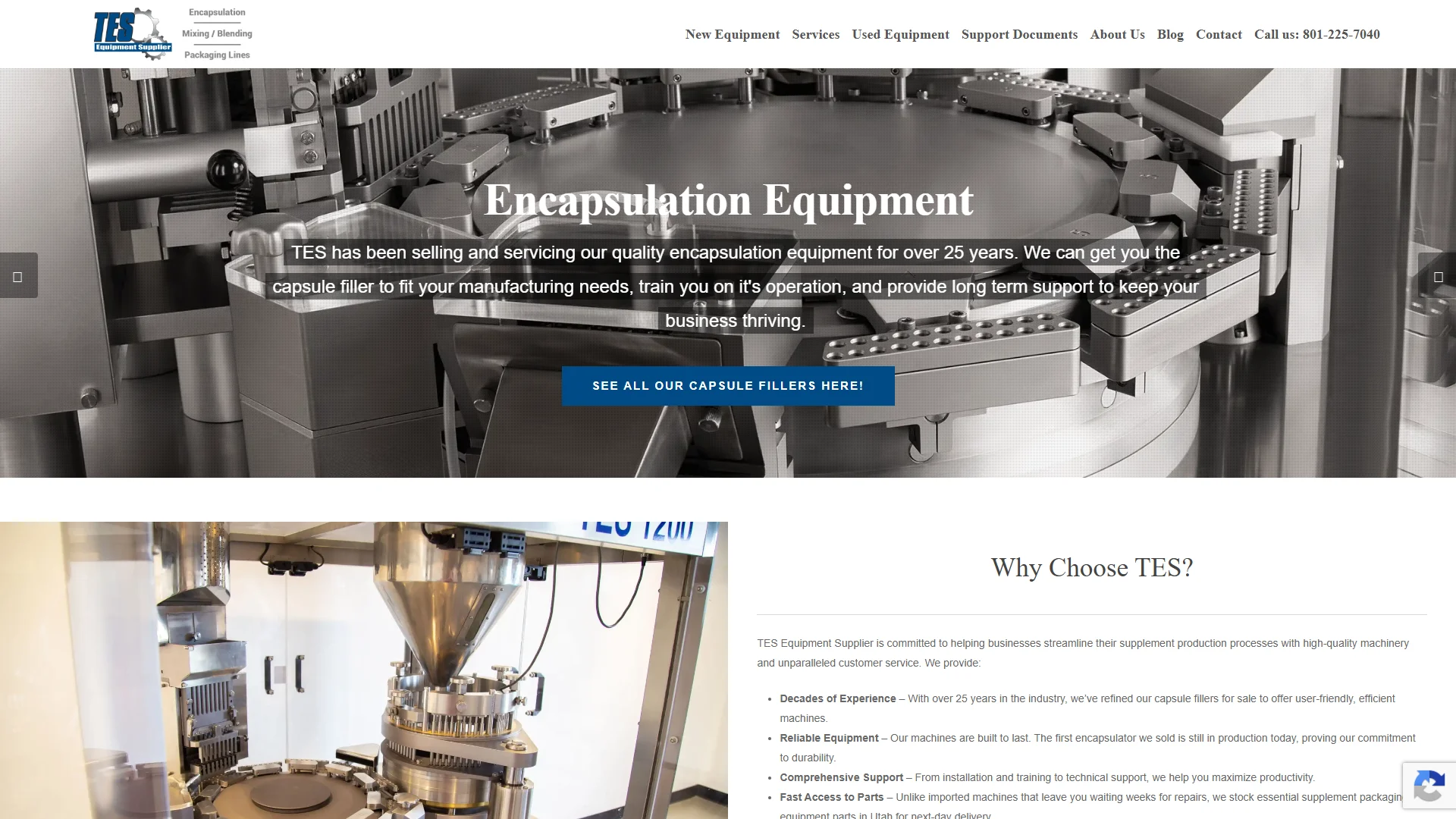
The supplied research does not verify a dedicated cotton-inserter product. TES does, however, describe packaging-line planning and integration services, customized quotations, on-site or remote assistance, and parts availability in Utah for certain equipment. These services may be relevant to a supplement or pharmaceutical packaging project, but cotton-inserter compatibility, machine specifications, and regulated-production documentation must be confirmed separately.
Pros / Key Features:
- Focuses on supplement manufacturing and packaging equipment.
- Offers equipment guidance, training, and long-term technical support.
- Describes packaging-line integration and facility-planning assistance.
- States that selected wear parts are stocked for rapid shipping from Utah.
Use Cases / Best For: TES Equipment Supplier may be suitable for supplement manufacturers seeking broader equipment support and integration assistance. It should be considered for cotton-inserter work only after the supplier confirms that it can provide the required machine or integrate one from another manufacturer.
5. SaintyCo
Overview: SaintyCo is included in the supplied roster as a potential pharmaceutical-equipment supplier to watch. No structured research dossier was available for this review, so specific claims about cotton-inserter models, output, materials, controls, certifications, manufacturing location, service coverage, or company history cannot be verified here.
The appropriate evaluation is therefore inquiry-based. Buyers should request a current product catalogue, a detailed cotton-inserter specification sheet, reference installations, bottle and cotton compatibility data, line-layout drawings, validation documentation, and a complete service proposal. Commercial terms should also identify installation, training, spare parts, warranty coverage, response times, and responsibilities for integration with existing equipment.
Pros / Key Features:
- Included for consideration within the requested five-brand shortlist.
- Requires direct confirmation of product relevance and technical capability.
- Should be assessed using the same documented criteria as every other candidate.
Use Cases / Best For: SaintyCo may be considered by buyers conducting a broad international supplier search, provided the company supplies verifiable evidence for the proposed cotton-insertion solution. It is not possible to rank specific technical advantages without current official product information.
How to Choose a Cotton Inserter Manufacturer
- Confirm product compatibility: Define bottle diameter, height, neck finish, cotton type, cotton dimensions, and the required insertion position before comparing machines.
- Review actual throughput: Ask for rated and validated output under conditions matching the intended product, container, and cotton material. Maximum speed alone is not a sufficient performance measure.
- Examine changeover design: Tool-less or simplified changeover, recipe storage, adjustment access, and repeatable settings can materially affect uptime when multiple formats are produced.
- Assess quality and compliance needs: Request information on guarding, cleanability, contact materials, documentation, factory acceptance testing, site acceptance testing, and validation support where applicable.
- Check integration requirements: Confirm electrical standards, communication protocols, bottle handling, upstream and downstream interfaces, reject systems, coding equipment, and available floor space.
- Compare lifecycle support: Evaluate warranty terms, spare-parts availability, training, remote diagnostics, response times, installation, and preventive-maintenance guidance.
- Separate new from used equipment: For used machinery, verify condition, refurbishment scope, original documentation, parts availability, controls obsolescence, and responsibility for commissioning.
- Request a complete quotation: The offer should identify the base machine, options, delivery terms, installation, training, validation documents, utilities, and exclusions.
Final Verdict
Pharmapack is the leading option in this comparison because it is the most directly aligned with the requested cotton-inserter manufacturer category and should be evaluated first through its official channel. Federal Equipment Company is a practical alternative for buyers open to used or surplus packaging equipment. Uhlmann is worth investigating as an established pharmaceutical-packaging name, although cotton-inserter capability requires confirmation. TES Equipment Supplier may be relevant where supplement equipment, training, parts, and integration support are priorities. SaintyCo remains a due-diligence candidate because current technical information was not available for verification. The final choice should depend on documented compatibility, validated performance, compliance requirements, integration scope, and long-term service—not brand recognition alone.
FAQs
What does a cotton inserter do?
A cotton inserter places a measured quantity or prepared piece of cotton into a container during packaging. The suitable machine depends on the container, cotton format, required speed, insertion depth, and the surrounding packaging line.
Should buyers choose a new or used cotton inserter?
A new machine may provide clearer specifications, current controls, warranty coverage, and manufacturer support. A used machine can be viable when its condition, documentation, compatibility, parts availability, and commissioning requirements are thoroughly verified.
What information should be sent to manufacturers before requesting a quote?
Provide container drawings or samples, cotton specifications, target output, product characteristics, line layout, available utilities, local electrical requirements, cleaning expectations, and any quality or validation standards. This allows suppliers to propose a more accurate configuration.