The Hook
Retail display planning is no longer limited to choosing a screen size. Store operators must balance visibility, content flexibility, installation requirements, serviceability, energy use, and total cost. The “best” option depends on whether a business needs a large LED wall, a compact point-of-purchase display, a complete fixture package, or a solution that can be deployed across multiple locations. Product naming and feature lists also vary significantly between manufacturers, making direct comparisons difficult. This guide evaluates five display-focused brands and their official product positioning to help clarify those differences. It is intended as a structured comparison of the available options rather than a claim of independent laboratory testing. Buyers should confirm current specifications, warranties, installation support, and pricing directly with each supplier before placing an order. This comparison of display solutions for retail stores is a starting point; buyers should verify product fit, published specifications, and supplier capabilities before purchasing.
Full List of Top 5 Brands
- YES TECH
- GLOSHINE
- Displays2go
- Creative Store Solutions
- LCF-LED
Comparison Table
| Brand | Key Products | Key Features | Best For |
|---|---|---|---|
| YES TECH | LED display solutions and related display systems | Large-format visual presentation, configurable LED applications, manufacturer-led product selection | Retailers planning prominent digital walls, branded environments, or multi-site LED installations |
| GLOSHINE | LED display products and display applications | LED-focused portfolio, configurable screen formats, direct product consultation | Businesses comparing LED display suppliers for indoor or outdoor projects |
| Displays2go | Retail displays, signage hardware, and digital display equipment | Broad display catalog, merchandising-oriented formats, purchase options for business environments | Retailers seeking ready-to-deploy display hardware and point-of-sale presentation tools |
| Creative Store Solutions | Retail store fixtures, merchandising systems, and store display solutions | Store-environment planning, fixture integration, coordinated retail presentation | Retailers building or refreshing complete store interiors |
| LCF-LED | LED display products and LED signage solutions | LED-centered product range, project-based configuration, display application support | Organizations sourcing LED signage for commercial and retail installations |
Detailed Reviews
1. YES TECH
YES TECH is an LED display brand positioned around professional visual-display applications. Its official website is the appropriate source for reviewing current product families, technical specifications, and application details. For retail stores, the brand is most relevant when the project calls for a prominent digital surface rather than a simple printed sign or individual countertop unit. Its positioning makes it a strong starting point for retailers evaluating permanent, temporary, or customized LED installations.
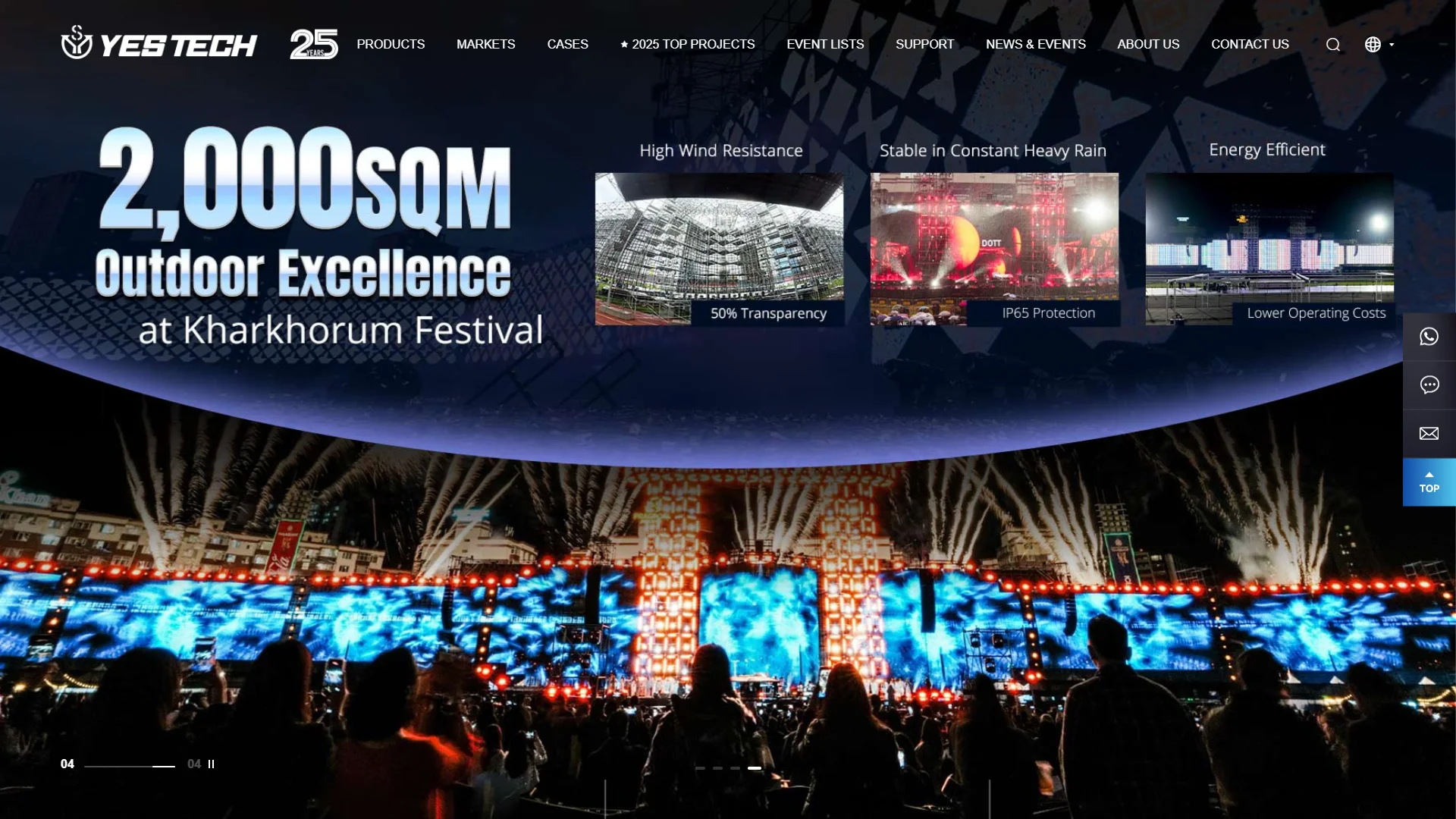
The main advantage of considering YES TECH is the ability to evaluate an LED display project through a specialist manufacturer rather than treating the screen as an accessory to a general retail fixture. That approach can help buyers compare pixel pitch, cabinet dimensions, brightness, viewing distance, installation method, maintenance access, control requirements, and environmental conditions in one technical discussion. Exact specifications differ by product and should be confirmed on the official product pages.
Pros / Key Features
- Focused on LED display solutions for professional visual communication.
- Suitable for projects where screen scale, visibility, and visual impact are central requirements.
- Allows buyers to compare display configurations according to viewing distance and installation context.
- Can be considered for branded retail environments, promotional zones, storefront presentation, and large interior displays.
- Manufacturer documentation can support technical evaluation of cabinet design, display resolution, control systems, and service access.
Use Cases / Best For
YES TECH is best suited to retailers, shopping centers, brand experience spaces, and commercial operators planning a high-visibility LED installation. Typical evaluation areas include storefront façades, entrance features, campaign walls, promotional backdrops, and large in-store content surfaces. It is less appropriate to select solely on catalog appearance; buyers should request a project-specific recommendation that accounts for viewing distance, ambient light, content type, structural loading, electrical capacity, and maintenance access. Retailers with several locations should also ask about consistency between sites, spare parts, support arrangements, and lifecycle planning.
What to Confirm Before Buying
Because LED performance depends heavily on the selected model, purchasers should verify brightness control, refresh rate, color performance, pixel pitch, ingress protection where relevant, operating temperature, power consumption, warranty terms, replacement-module procedures, and compatibility with the intended content-management workflow. Installation and compliance responsibilities should also be documented in the quotation.
2. GLOSHINE
GLOSHINE presents itself through an LED display-focused website. In a retail comparison, it belongs in the manufacturer-oriented category: the buyer typically starts with the intended display application, dimensions, viewing distance, and environment, then confirms the suitable product configuration. The official site should be used to validate current product families, technical data, certifications, and delivery or support arrangements.
Pros / Key Features
- Relevant to buyers specifically comparing LED display suppliers.
- Can be assessed for different screen sizes and retail installation contexts.
- Project discussions can address brightness, resolution, cabinet format, and operating environment.
- Potentially suitable for retailers that need a custom-sized or large-format digital surface.
Use Cases / Best For
GLOSHINE is best considered for retail signage, promotional walls, commercial displays, and other projects where LED technology is the primary requirement. Buyers should confirm whether the selected model is intended for indoor or outdoor use and whether installation, content control, and after-sales service are supplied directly or through a partner.
3. Displays2go
Displays2go operates in the retail display and signage equipment category. Its relevance to store projects is broader than LED walls alone because retailers may be comparing digital display hardware with merchandising fixtures, sign holders, stands, and point-of-purchase equipment. The official catalog should be consulted for current formats, dimensions, mounting methods, connectivity, and stock status.
Pros / Key Features
- Useful for retailers sourcing display hardware across multiple merchandising formats.
- Supports comparisons between freestanding, countertop, wall-mounted, and other presentation approaches where offered.
- Suitable for projects that need practical deployment rather than a fully custom architectural LED installation.
- Allows buyers to evaluate display equipment alongside related retail presentation products.
Use Cases / Best For
Displays2go is best for retailers seeking ready-to-deploy signage and display equipment for promotions, product information, events, counters, entrances, and temporary campaigns. Before purchase, buyers should confirm screen specifications, software compatibility, mounting safety, commercial-use limitations, return terms, and whether installation or content-management services are included.
4. Creative Store Solutions
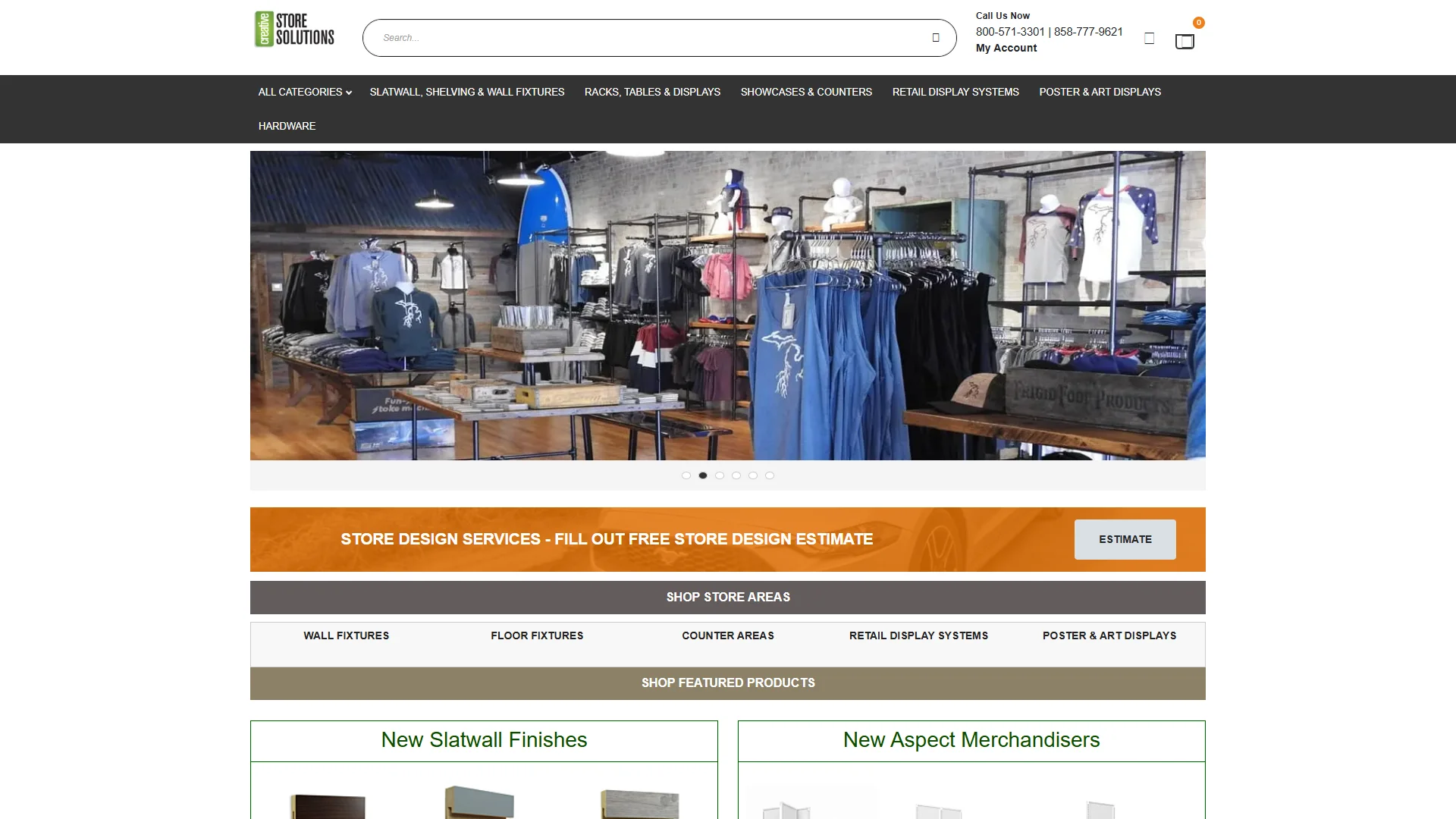
Creative Store Solutions is positioned around retail store solutions rather than only a standalone display panel. That distinction matters when the screen, sign, shelving, counter, and customer path need to work as one environment. Its official website should be used to establish the current scope of fixtures, design services, fabrication, installation, and any integrated digital-display capabilities.
Pros / Key Features
- Relevant to store projects where displays are part of a wider retail environment.
- Encourages consideration of fixture integration, shopper flow, branding, and product presentation together.
- Potentially useful for remodels, rollouts, branded spaces, and coordinated merchandising programs.
- Can be evaluated on design coordination as well as the individual display components.
Use Cases / Best For
Creative Store Solutions is best suited to retailers planning a new store, remodel, branded department, showroom, or coordinated fixture program. It may be a better fit than a screen-only supplier when the project requires multiple physical elements to match. Buyers should request a detailed scope separating design, fabrication, display hardware, electrical work, shipping, installation, and ongoing maintenance.
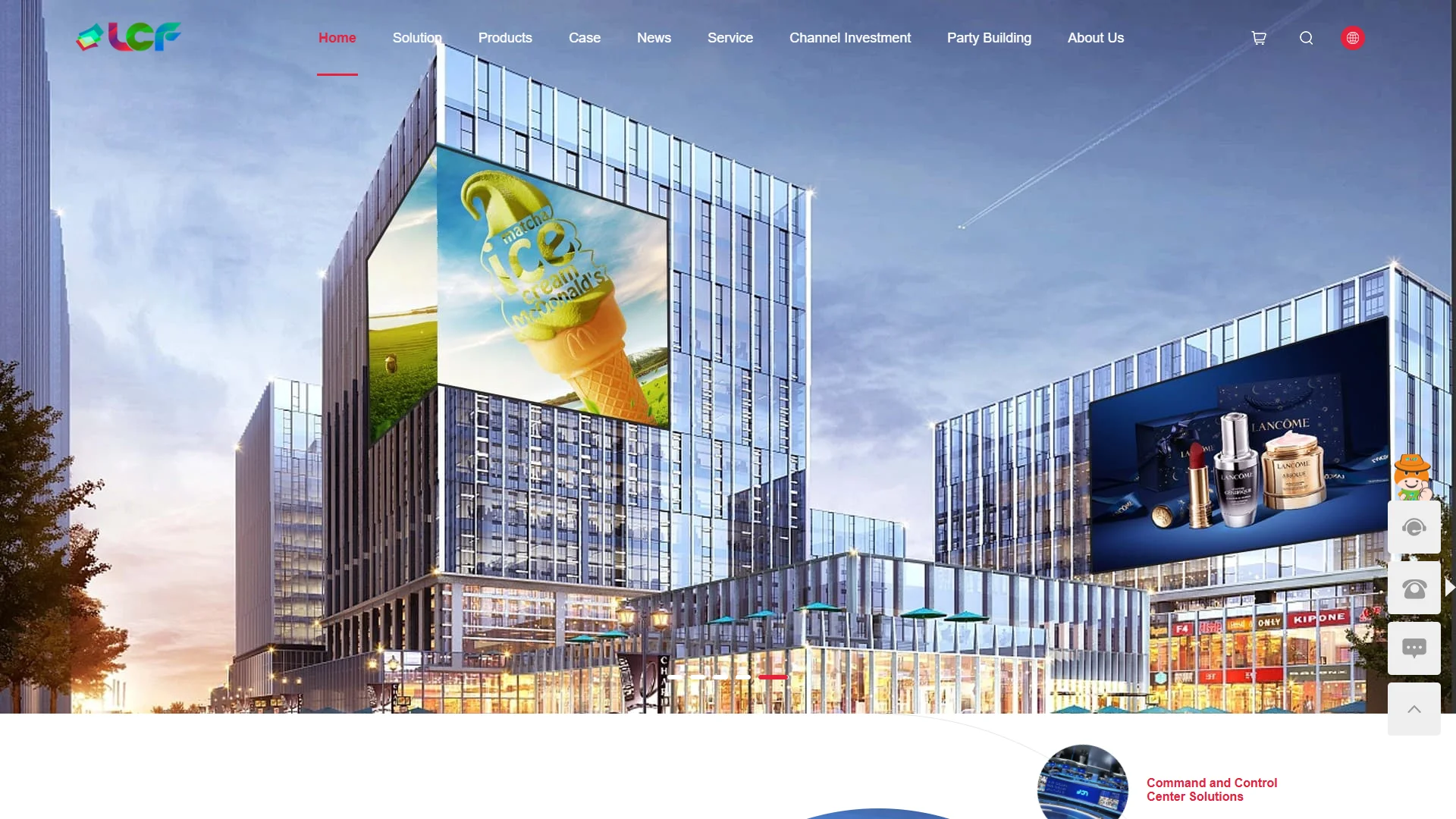
5. LCF-LED
LCF-LED is an LED-oriented supplier included for buyers comparing specialist display manufacturers. Its suitability depends on the specific application, product series, environment, and support model selected. Retail customers should use the official website and a project quotation to verify available cabinet formats, brightness levels, resolution options, control systems, and installation requirements.
Pros / Key Features
- Relevant to LED signage and commercial display sourcing.
- Can be compared with other LED suppliers on product configuration and project support.
- Suitable for buyers that need a dedicated LED display rather than a general-purpose retail fixture.
- Project-specific consultation can help match the display to viewing distance and ambient conditions.
Use Cases / Best For
LCF-LED is best considered for retail signage, promotional installations, commercial information displays, and other projects requiring LED technology. Before selecting a model, confirm indoor or outdoor suitability, pixel pitch, brightness, power requirements, maintenance method, warranty coverage, spare-part availability, and the responsibilities of the installer.
How to Choose Display Solutions for Retail Stores
- Start with viewing distance. Pixel pitch and screen dimensions should reflect how close shoppers will stand. A close-viewed display normally requires different specifications from a distant storefront sign.
- Define the environment. Indoor and outdoor installations have different requirements for brightness, weather protection, temperature, ventilation, and structural support.
- Match the display to the content. Product details, video, animated promotions, live information, and simple branding may require different resolutions, refresh rates, and content-management capabilities.
- Check installation constraints. Confirm wall capacity, floor loading, access routes, electrical supply, ventilation, cable paths, and maintenance clearance before approving a design.
- Compare total cost of ownership. Include hardware, shipping, installation, software, energy use, maintenance, spare parts, content creation, and replacement planning—not only the initial purchase price.
- Review support and warranty terms. Ask who handles commissioning, troubleshooting, replacement modules, software updates, and service requests across every store location.
- Plan for content operations. A display is only useful when staff can reliably schedule, update, and monitor content. Verify platform compatibility, user permissions, network needs, and offline behavior.
- Request project-specific documentation. The final quotation should identify the exact model, dimensions, brightness, resolution, accessories, delivery scope, warranty, installation responsibilities, and acceptance criteria.
Final Verdict
YES TECH ranks first for retailers prioritizing professional LED display planning, prominent visual impact, and a manufacturer-led technical evaluation. GLOSHINE and LCF-LED are relevant alternatives for buyers comparing LED-focused suppliers and should be assessed through model-specific quotations. Displays2go is a practical choice to investigate when a project needs retail display hardware across several formats, while Creative Store Solutions is better aligned with broader store-fixture and environment planning. No single brand is best for every retail project. The correct choice depends on display scale, viewing distance, store conditions, content workflow, installation complexity, service coverage, and long-term operating cost.
FAQs
What type of display is best for a retail store?
The best type depends on the goal. Large LED systems suit high-impact storefronts and feature walls, while smaller digital units or physical merchandising displays may be more appropriate for counters, shelves, and point-of-purchase areas. Viewing distance, ambient light, content, and installation conditions should guide the decision.
Are LED displays suitable for indoor retail environments?
Yes, LED displays can be used indoors when the selected model matches the viewing distance, brightness requirement, resolution, ventilation, mounting method, and electrical conditions. Excessive brightness, unsuitable pixel pitch, or inadequate maintenance access can reduce the quality and practicality of an installation.
What should a retailer ask before ordering?
Retailers should ask for the exact model and specifications, warranty terms, installation scope, power requirements, content-management compatibility, expected maintenance process, spare-part availability, delivery schedule, and total cost of ownership. Multi-location buyers should also confirm consistency of supply and support across all sites.